

What Autistic Kids’ “Fight‑or‑Flight” System Reveals About Anxiety
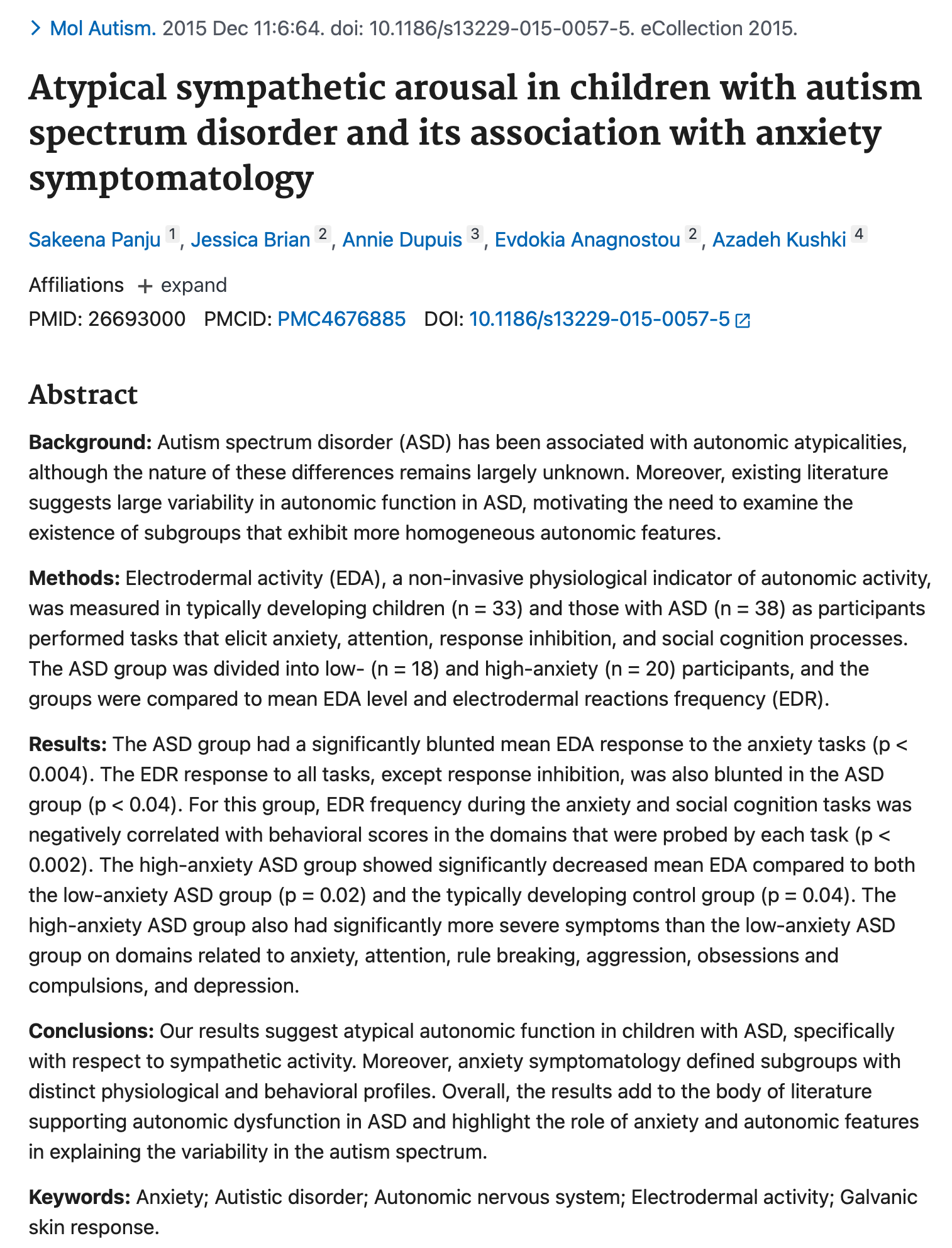
Atypical sympathetic arousal in children with ASD and its association with anxiety Molecular Autism Sakeena Panju, Jessica Brian, Annie Dupuis, Evdokia Anagnostou, Azadeh Kushki
This study helps explain why anxiety looks and feels so different in many autistic kids—and what their bodies are doing behind the scenes.
Researchers measured tiny changes in skin sweat (electrodermal activity, EDA) while autistic and non‑autistic children did anxiety, attention, and social‑thinking tasks. In most tasks, autistic kids showed lower sympathetic “fight‑or‑flight” arousal than non‑autistic kids—fewer and smaller EDA spikes when challenged.
Crucially, within the autistic group, those with the highest anxiety had the lowest sympathetic responses and the most behavioural difficulties (anxiety, attention, aggression, compulsions, low mood). In other words, autistic kids with big day‑to‑day struggles often had quieterstress‑signals on the skin, not louder ones.
The takeaway is simple: autistic children’s stress systems are atypical, and anxiety creates distinct physiological subgroups. That’s exactly why objective, wearable measures of arousalare so valuable—they can reveal anxiety that behaviour and self‑report often miss.